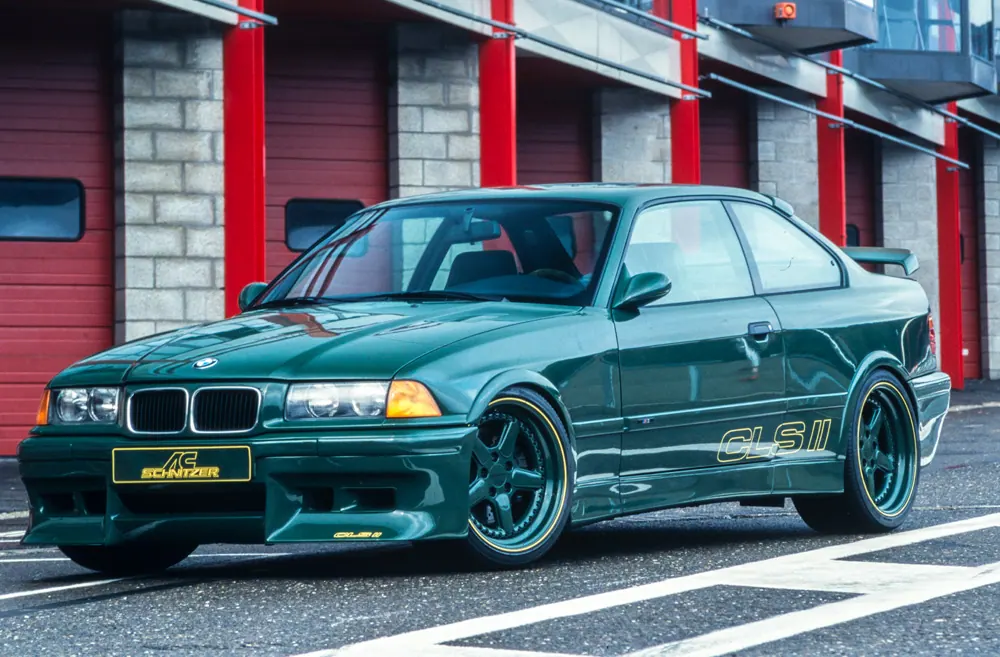
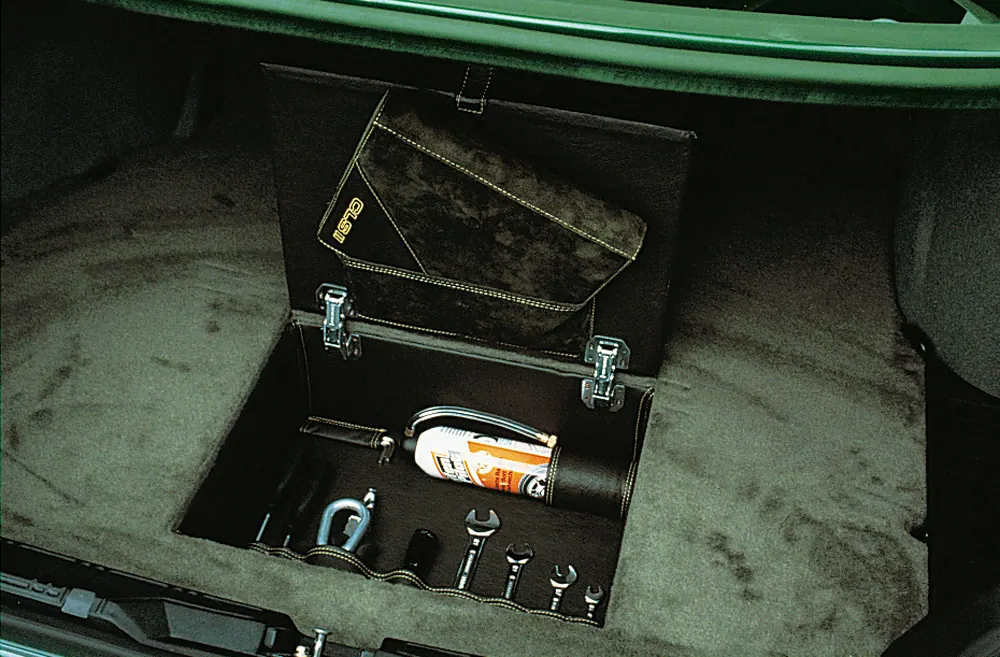
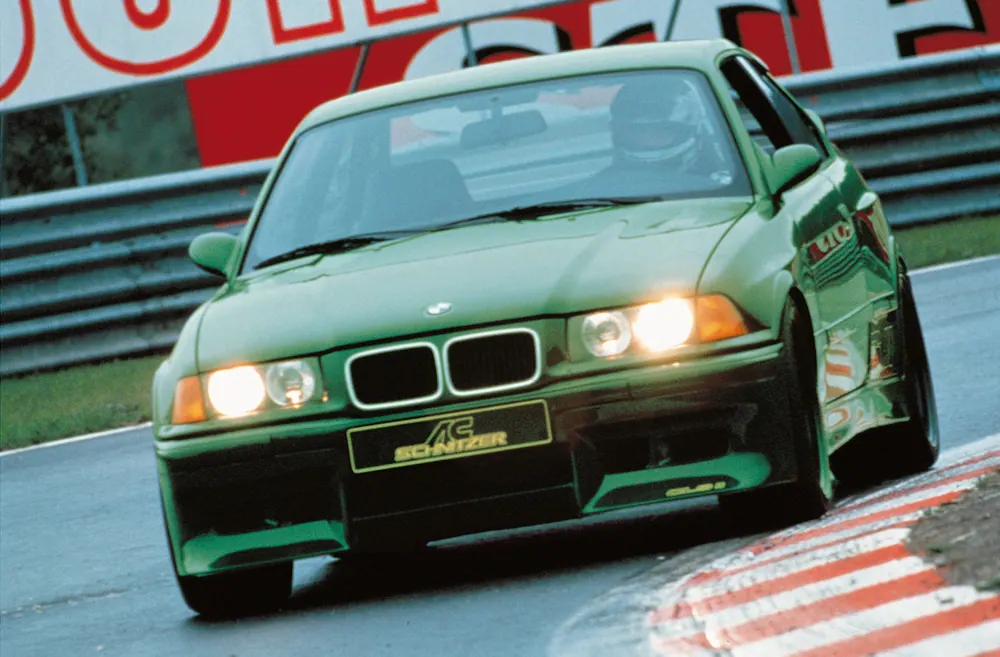
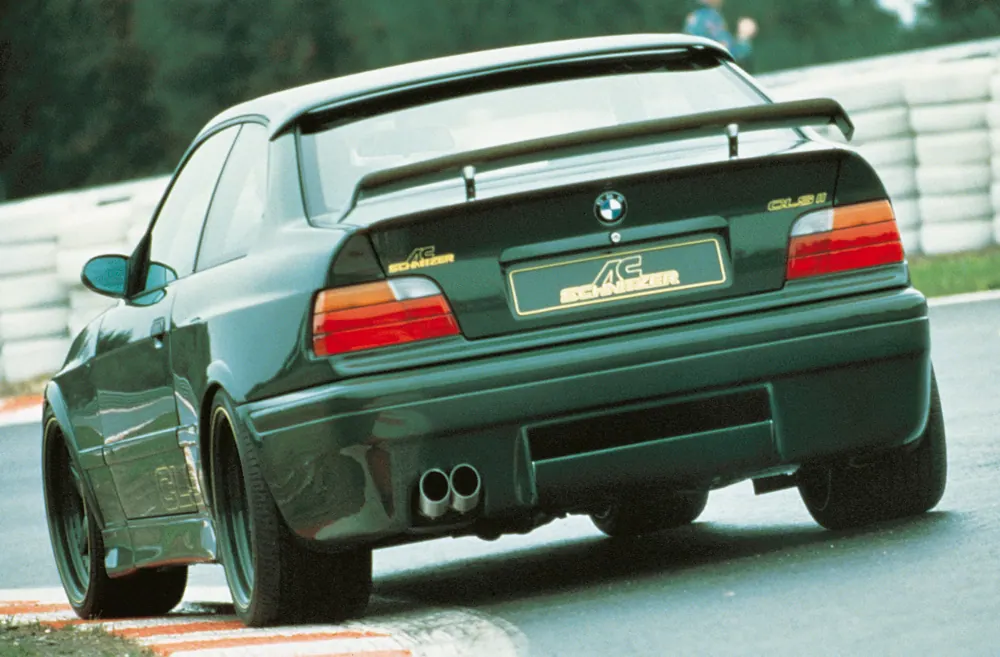
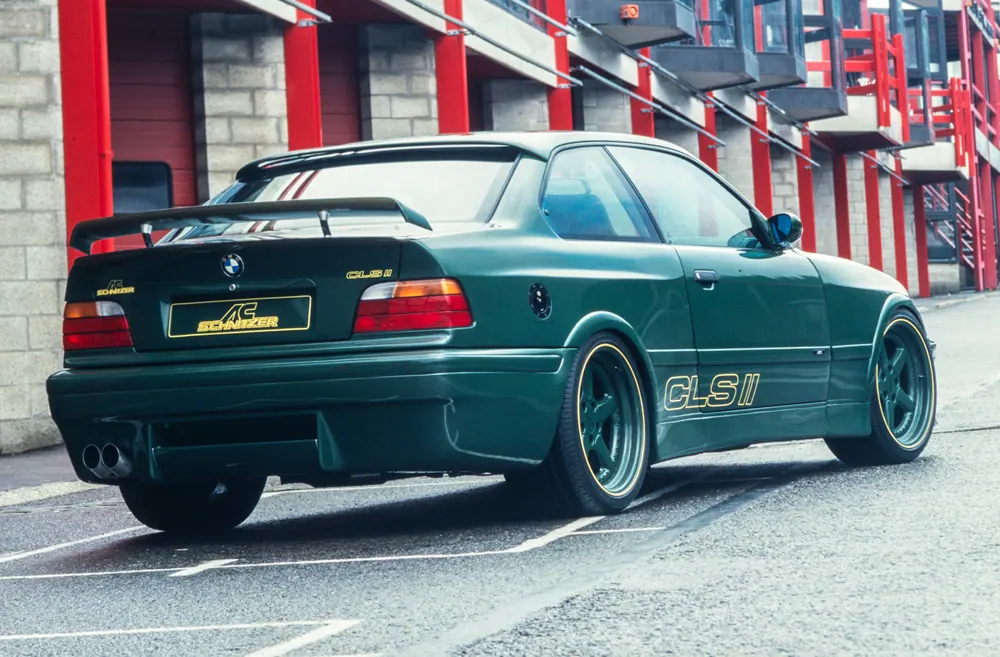
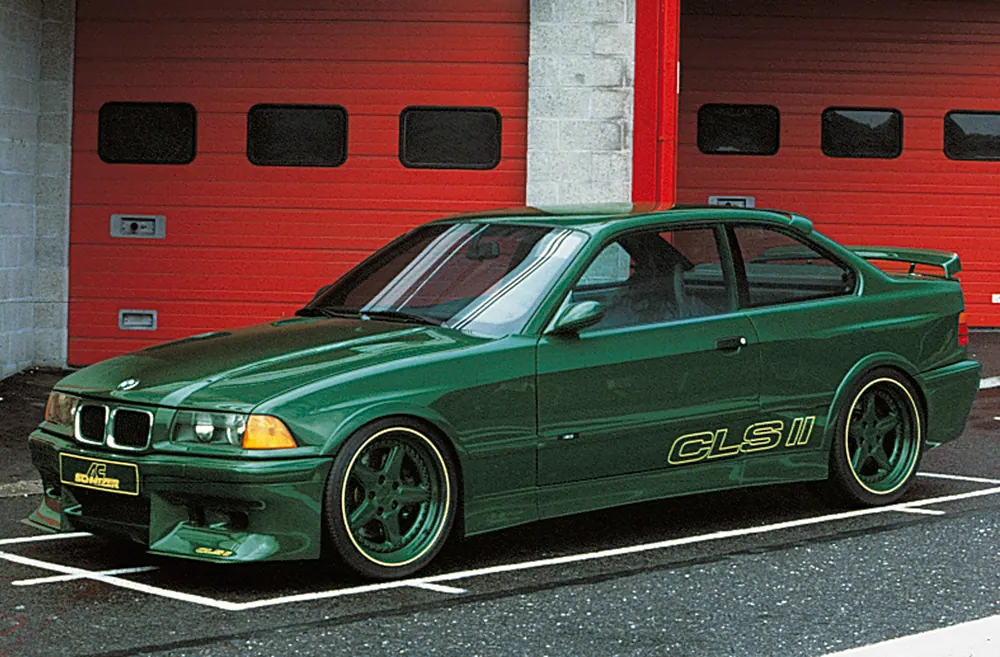
The CLS II, short for Coupé Leichtbau Silhouette II, was a concept study that showed how professional tuning could turn an M3 into a pure-bred racing touring car for road use. It built on the CLS presented in 1993, yet was a completely new development. Many of its components had first been tested in the Group A M3 of the AC Schnitzer racing team, under conditions as tough as the Nürburgring 24 Hours.
The goal was maximum performance with full everyday usability, which meant an almost complete engine rebuild. A special AC Schnitzer control unit program, precisely balanced connecting rods, a finely balanced crankshaft and a new intake with a large airbox raised output to 257 kW (350 hp) with 355 Nm. The CLS II sprinted from 0 to 100 km/h in 5.1 seconds and reached 290 km/h. At the 1997 Tuner Grand Prix it beat the competition by a wide margin.
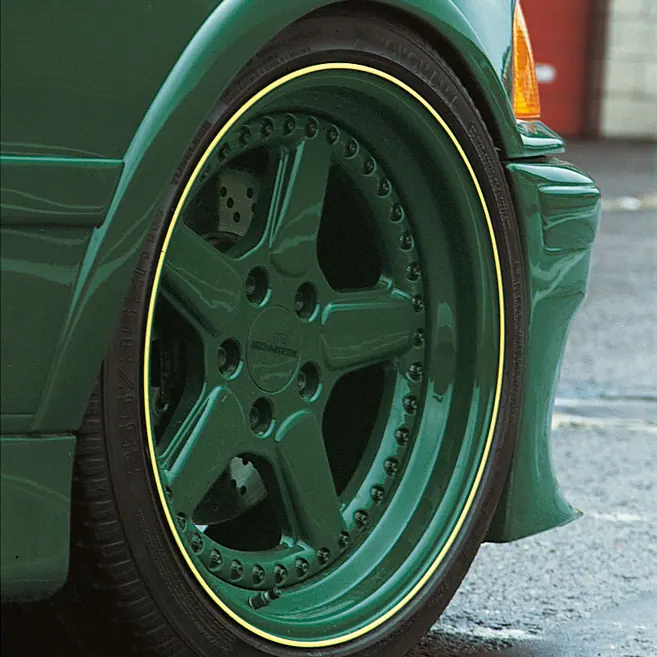
Lightweight design covered the whole car, using a strong, ultra-light carbon-Kevlar material. Progressive springs lowered the M3 by about 35 mm and worked with sports gas dampers and adjustable anti-roll bars, giving race-like handling with real comfort. The height-adjustable AC Schnitzer RS coilover suspension was tuned on the Nordschleife and on public roads. ABS-controlled brakes with drilled discs, plus 9.5J and 10.5J x 18 racing wheels on 255/35 and 285/35 R 18 tyres, kept the performance in check.
A roof wing and an electrically adjustable rear wing added downforce. In a sport auto wind tunnel test (issue 11/1997), the rear wing turned 40 kg of lift into 11.3 kg of downforce at the rear axle. Inside, light racing seats in competition green leather replaced the standard ones, the rear bench was removed, a DTM digital display informed the driver, and yellow Kevlar/carbon parts contrasted with the dark green paint.
Key facts
- Base: BMW M3 3.2 Coupé
- 257 kW (350 hp), 355 Nm
- 0 to 100 km/h in 5.1 s, top speed 290 km/h
- Winner of the 1997 Tuner Grand Prix
- Nordschleife lap: 8:16 min, Hockenheimring: 1:13.4 min